The JUDDD website has now been down for ages. It looks like the domain has been sold to some weight loss product. I am really glad I copied all the text from the original page below because it is still quite helpful. In the meantime I did find a new calculator for this type of dieting. This is from the 5-2 diet website. Click here for the calculator What is TDEE? How does it work? The 5-2 Diet or Alternate Day Fasting Diet It gives you a guideline for how many calories you can eat on non-fasting days without gaining weight: by also fasting twice a week, you will create a calorie … [Read more...]
Who are the Presidents of the United States in order
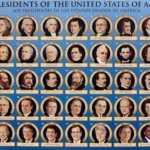
45 Presidents of the United States in Order Vice Presidents George Washington, 1789-1797 John Adams, 1797-1801 Thomas Jefferson, 1801-1809 James Madison, 1809-1817 James Monroe, 1817-1825 John Quincy Adams, 1825-1829 Andrew Jackson, 1829-1837 Martin Van Buren, 1837-1841 William Henry Harrison, 1841 John Tyler, 1841-1845 James Knox Polk, 1845-1849 Zachary Taylor, 1849-1850 Millard Fillmore, 1850-1853 Franklin Pierce, 1853-1857 James Buchanan, 1857-1861 Abraham Lincoln, 1861-1865 Andrew Johnson, 1865-1869 Ulysses S. Grant, 1869-1877 Rutherford Birchard … [Read more...]
Hillary Clinton Falls Down. Hillary’s Health

Many media sites and news reporters, if you can call them that, kept saying the right was making a big deal out of Hillary's heath. Even going so far as to call it a "consperisary". After what happened this weekend, I do not think anyone can call it anything other than what it is.She is sick and they all are lying about it. Over and over.I think the best article I read so far is this one from The Week, "Why did Hillary Clinton Lie About her Health?". Video of Clinton’s hurried departure from the Ground Zero memorial showed her buckling and stumbling as she got into her van. Clinton’s … [Read more...]
The Final Two on MasterChef Au, Season 8
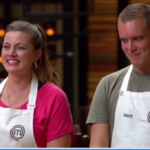
I was feeling like Elena might make it all the way when they ignored her for the first few episodes. I wrote in week 3 or 4, hey who is this and is she a sleeper?Well turns out she was. Her and Matt have to be two of the nicest people I have ever seen on this show.Neither of them lose their tempers, say anything bad about anyone and they stay positive no matter what.I will be happy no matter which one of them wins.They are both talented amazing chefs and I know they will have great careers in the food industry.Also Matt should own his restaurant, not a food truck. He is better than a food … [Read more...]
Does Masterchef Australia manipulate or fix results?

As I get ready to watch the best contestant in the game this year, Matt, possibly go home with today's elimination test. I wonder. Does Masterchef have some reality TV manipulation going on? After watching Unreal, a dramedy about a show like the Bachelor. written by ex writers from the Bachelor, and reading articles about how dishonest these reality TV shows results often are. It makes me wonder about MasterChef Australia. When a mediocre cook like actress Theresa Wong Visintin, gets back in midway, after having a few weeks off to memorize the dish she cooked and learned from former … [Read more...]
MasterChef Week 8 The Relay Test

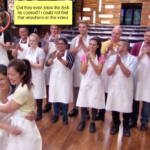
I am not a fan of Theresa Visintin and I do not think she should of been brought back. She proved that today when she was befuddled and wasted 10 minutes of her 15 minutes on the relay challenge and basically had no idea what to do. That is exactly how I see her as a cook. Unless she has a recipe or already cooked it when she was off the show, forget it. She is not in the rest of these people's league at all.So with that horrible start and no vision, (seriously WHY did they pick her as the first person?), they are all going to elimination. You could see that coming a mile away. She got them … [Read more...]
Hoarse throated soap opera starlet contestant gets back in MasterChef Australia 2nd chance
When Theresa Visintin was eliminated I was relieved. She has a strange nervous energy that I found jarring, and her deep hoarse voice was getting on my last nerve. Today when she cooked her way back into the show, I felt bummed out. I do not think she is a winning chef. She follows recipes. Her time management is bad. Her dish today was something she got from Reynold. She seems often befuddled and confused and with no good ideas for dishes. She has no skill on describing dishes either. First she said it was winter in Canada to the camera and when they asked her what the dish was, she was … [Read more...]
Beauty and the Beast Emma Watson Trailer

The first trailer for upcoming Disney live action movie Beauty and the Beast has finally dropped, starring Emma Watson in the lead as Belle. Bill Condon, best known for The Twilight Saga: Breaking Dawn, is directing the remake from a script by Stephen Chbosky, who directed Watson in The Perks of Being a Wallflower. Watson first announced her casting in January 2015, writing on her official Facebook page that the animated film was “such a big part of her growing up”. “My six-year-old self is on the ceiling, heart bursting,” she said. “Time to start some singing lessons. I can’t wait for … [Read more...]
MasterChef Australia Series 8 Week 4 – Nigella Lawson Week- Recaps and Updates

MasterChef Australia Season 8 Episode 16 RecapNigella Lawson comes walking in looking the bomb in her amazing purple dress. She has the best voice too. Low and throaty. Also I love how she dives into the food. She puts huge bites in mouth and just goes for it.The first round of the mystery box, is full of items Nigella loves.Mimi is a huge fan and tries to make a cake with ice cream, but it flops."Whose heading to immunity heaven, and whose heading to pressure test hell?".The Top Three Are:Harry- White Chocolate and Rose Royale -recipe here Mimi-Salted Chocolate Tart with Beetroot … [Read more...]
Chewbacca Mask Laughing Lady Video- Mom Goes Viral

Star Wars The Force Awakens Chewbacca Movie-like Appearance Electronic Mask Candace Payne, a mother of two from Texas, filmed herself trying on a Chewbacca mask and became the highest viewed video on new Facebook Live video platform ever. As of Friday afternoon, almost 40 million people had watched Ms Payne's gleeful video. "Oh, I'm such a happy Chewbacca!" Ms Payne shouts. (Update: As of early Saturday, the video has had 100 million views.) The Star Wars fan had just bought the talking wookiee mask — as in, Chewbacca — on store credit after making a few returns. Of course, it … [Read more...]
MasterChef Australia Series 8 Reynold Week 3 Recaps

This is a show that is quite hard to blog about 5 days a week. I do have a real job too. :) If you are reading my recaps a comment or two would help me know to keep blogging it! MasterChef Australia Season 8 Episode 11 Recap | Viewer Chosen Mystery box MasterChef Australia’ Season 8 episode 11 was the Mystery Box Challenge. In a MasterChef Australia first. they had the viewers select the ingredients. Contestants have 75 minutes to create a dish using at least one ingredient chosen by the viewers. I can see from the previews they are trying to get the viewer more involved this season. … [Read more...]
Paid Injunctions- Rich and Famous WHO USED THEIR WEALTH TO HIDE THEIR AFFAIRS- Who are they?

THE STARS WHO USED THEIR WEALTH TO HIDE THEIR AFFAIRSA large number of household names have secured injunctions to hide their affairs - often using their families and children as a reason to keep their extramarital sex secret.Here are the ones we still cannot name: The married celebrityKnown as PJS, or the 'olive oil bath threesome' celebrity, his case is about to decided by the Supreme Court – after lower courts initially refused him a privacy injunction because his cheating contradicted his public portrayal of married commitment. Elton John and husband who had the affair, David FurnishThe … [Read more...]
MasterChef Australia Season 8 Episode 11 Recap | Invention Test
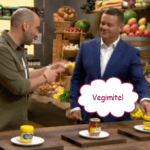
For the part one of this episode recap click here now.Anastasia gets to choose the ingredient. We have Peanut Butter, Marmalade and Vegemite. The boys reckon the Vegemite may be a stumper. Which I find odd, since I thought Vegemite was an Australasian thing. Vegemite is a dark brown Australian food paste made from leftover brewers' yeast extract with various vegetable and spice additives developed by Cyril P. Callister in Melbourne, Victoria, in 1922.A spread for sandwiches, toast, crumpets and cracker biscuits as well as a filling for pastries, Vegemite is similar to British, New Zealand and … [Read more...]
MasterChef Australia Season 8 Episode 11 Recap | Viewer Chosen Mystery box
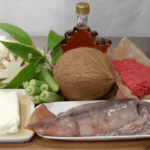
MasterChef Australia’ Season 8 episode 11 was the Mystery Box Challenge. In a MasterChef Australia first. they had the viewers select the ingredients. Contestants have 75 minutes to create a dish using at least one ingredient chosen by the viewers. I can see from the previews they are trying to get the viewer more involved this season. Not sure that is a great idea given this was like an ideal mystery box with great ingredients! Not to hard to make a delicious dish out that stuff. Everyone oohed and awed. I am sure they were all thinking the same, thanks viewers and fans! They focus more … [Read more...]
MasterChef Australia Series 8- Week Two Recap

MasterChef Australia, Series 8 Episode 6-10 Recaps Marco Pierre White Week. Gasp and Excitement and Swooning all round. I like Marco, but I feel like he is a bit over the top and the worship of him is a bit much at times. He is great on this show however. He knows how to bring and it and make them cook like they never have before! I also like he shares honest stories about his failures and always seem to have a kind word for the most down and out contestants. He almost sounds like a therapist at times, don't you think? Off we go. Marco says to them " The Mystery Box has been designed to … [Read more...]
MasterChef Australia 8- Elimination Number One
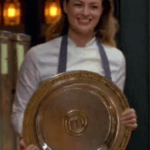
Elimination Number One-Part One: The winner from last year, Billie McKay was our guest judge. Okay seriously how much do we love her? She is the best. Life is going well for her. She works for Heston Blumenthal at the Fat Duck. She seems very happy. The contestants were thrilled to meet her, and none more than Nidhi Mahajan. Every year there is a cute and sweet Indian cook who usually get pretty far. This year we have the adorable Nidhi. I love Indian Cuisine and always enjoy seeing all the marvelous Indian dishes people cook up each year on MasterChef Au. Here in American, Indian … [Read more...]
MasterChef Australia 8 Elimination Chart- Updated each week

Each week we will recap the week, the elimination challenges and who went to the pressure tests and who is eliminated. This is sure to be an exciting season. Matt Preston, George Calombaris and Gary Mehigan will all come back as judges. “MasterChef hands down is the most influential cooking show in the world,” Calombaris claimed in one of the trailers Network Ten shared on Twitter. This season which will feature celebrity guests Nigella Lawson, Heston Blumenthal, and Marco Pierre White Be sure to come back and visit us for updates on MasterChef Australia Series/Season … [Read more...]
Who is Alden Ehrenreich? He is the new Hans Solo Star Wars

Who is Alden Ehrenreich? The New Hans Solo for the Star Wars Franchise. I think it is great Disney plans to put out a new Star Wars movie once a year for the next 10 years at least. I will never forget the first time I saw the original first Star War movie in the theater when I was a kid.I guess it is called Star Wars: Episode IV - A New Hope (1977) now. I was blown away. I also like how they cast unknowns like Alden Ehrenreich and Daisy Ridley and others. Date of Birth 22 November 1989, Los Angeles, California, USA Height 5' 8" (1.73 m) Mini Biography Alden … [Read more...]
Who is the famous actor family man, who had sex with Wayne Rooney’s prostitute?

Here we go again tweeted Helen Woods the hooker who tried to out the famous actor who hired her for sex and whom she used a sex toy on the behind with. This is not a new story. It hit the airwaves in 2011, but now it looks like a US publication is going to print his name. I however cannot find the article anywhere. So who is NEJ & BDZ? THE UK media remains gagged due to a High Court injunction but the married star's identity is set to be revealed in America today... so far a big fat nothing. Celebrity superinjunction: British star to be exposed after hiring hooker NEJ & BDZ … [Read more...]
Pearl Mackie-Doctor Who New Companion Video Preview

For a first look at Mackie as Bill, check out her introduction trailer below.Pearl Mackie-Doctor Who New Companion Video PreviewPhoto Montage of Pearl MackiePearl Mackie has joined the cast of Doctor Who as Bill, Peter Capaldi's new companion, BBC America announced. Pearl Mackie announced as new Doctor Who companionThe actor Pearl Mackie has been revealed as the new companion for Doctor Who"I'm incredibly excited to be joining the Doctor Who family," the actress said of her first major role in a TV series. "It's such an extraordinary British institution, I couldn't be prouder to call the … [Read more...]
Follow Us!